
Long Ma
Co-Founder & CEO
What is an AI Influencer? Best Guide for Brands and Founders
Social media is evolving fast and has become the largest place for advertising. Brands spend more to get attention, and it keeps getting harder to hold attention. Human influencers require payment, go off brand, or simply disappear. This entire system is very inconsistent and unpredictable, putting pressure on marketing teams to keep up with modern brand needs.
To fill this gap, the space is efficiently filled by AI influencers, which can overcome these shortcomings with a fraction of the revenue spent. These influencers can streamline the content creation process, making marketing more convenient. The influencer market is growing, and research indicates that virtual influencers are gaining ground fast (reaching $45.88B USD by 2030). This is the right time to get into it and experience the full range of benefits.
What is an AI Influencer?
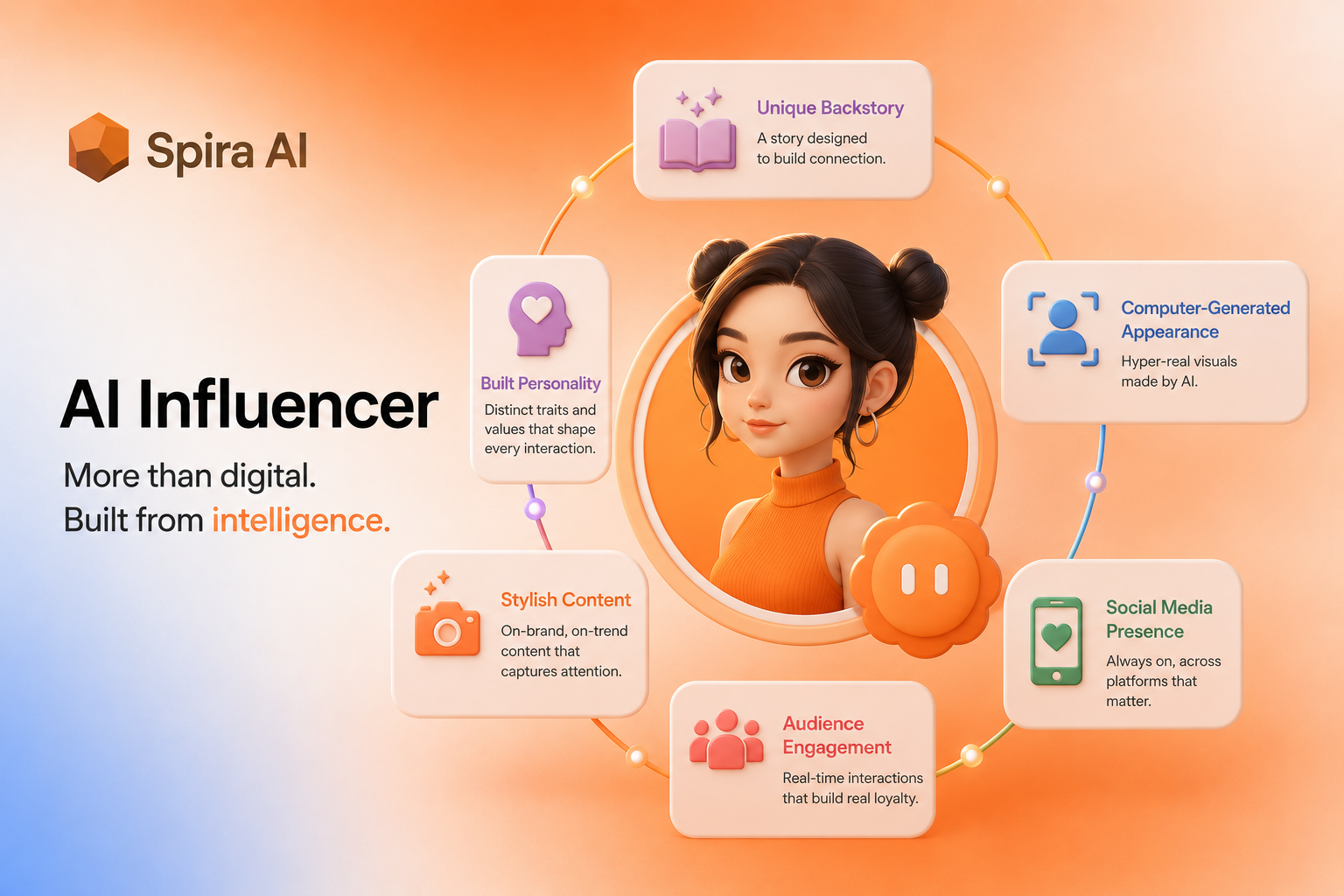
An AI Influencer is a digitally created persona that can sound and act like a human influencer. These influencers can be very similar to a real human creator, but they are made using CGI, AI, or a mix of both. AI influencers can vary in style, ranging from hyper-realistic to stylistic ones. The real benefit of AI influencers is to be able to generate content without the need for a real human. So instead of working with content creators and influencers to push campaigns, brands can create their own AI influencers to manage them directly, because they are technologically designed and scripted to promote products and brands. Below are some key features that set AI influencers apart from human influencers on social media.
Visual Consistency & 24/7 Support
When generating AI influencers, brands and agencies will create a backstory that serves as the foundation of their personality and visual appearance. Since these AI influencers are digital avatars and do not require make-up or aesthetic support, AI influencers can maintain identical facial structures, hair, and additional unique features across photos and videos on all platforms. Furthermore, since they are digital, they are able to operate online 24/7.
Operate anywhere at anytime:
AI influencers are digital personas, so as long as a brand has access to a computer or the internet, these influencers can generate content anywhere 24/7. Since they operate online and do not require any human setup, AI influencers can create content simultaneously in different regions and can seem like they’re everywhere in the world at the same time. They also do not need additional funds for travel and event attendance for brand exposure and awareness.
AI influencers differ from other virtual peronas, because of the closeness and likeness to a human influencer. Virtual characters and personas are not new, as they have been popularized in the gaming and animation industry for decades. However, if virtual characters are used for content and culture, AI influencers are primarily geared towards advertising, sales, and marketing. AI influencers maintain a social media presence, which is what makes them different from other virtual personas.
A Brief History of Virtual Influencers
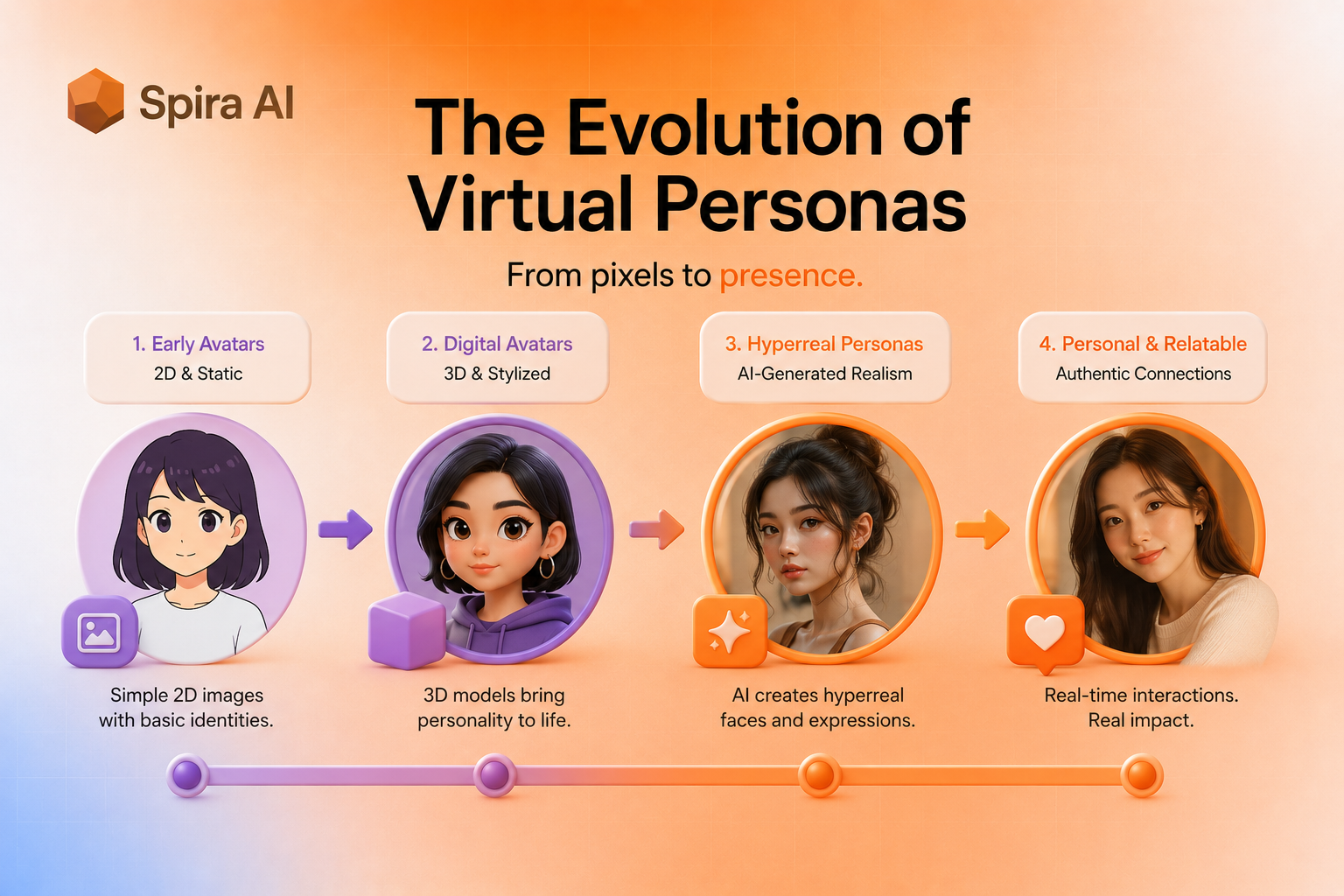
Virtual personas did not start with AI. They evolved over decades from cartoon mascots to CGI characters, and now to today’s AI-generated personas.
Early Virtual Characters
For a long time, virtual characters such as animated mascots were used by brands for marketing. It’s hard to consider these virtual characters as influencers because such virtual characters are used within a storyline or a specific game. These characters did not have a specific social following or a brand narrative. However, these virtual characters paved the way for how digital personas can be created and how specific personalities or visuals can create a large audience and fandom.
Rise of Lil Miquela and VTubers
Lil Miquela was the beginning of the popularization of an AI influencer. An AI company, Brud, managed a virtual persona or character named Lil Miquela in 2016. Lil Miquela had a detailed fictional narrative as a 19-year-old robot based in Los Angeles. In 2018, Lil Miquela was mentioned as one of the 25 Most Influential Internet Personalities in Time Magazine. She was popularized because the internet was trying to figure out whether or not she was a real person. Fast forward, we also started to see the rise of VTuber (Virtual YouTuber), who is a content creator or streamer that uses a digital or anime-style avatar rather than their real face. Starting in the 2010s, more AI/virtual personas started to engage with a real audience, rather than within a fictional storyline or universe. The world of virtual characters was starting to creep into the real world.
Fashion Goes Mainstream
Luxury fashion brands such as Dior, Prada, and Calvin Klein started to experiment with AI personas by 2020. They were collaborating with AI influencers and personas such as Lil Miquela, Imma, and Shudu to experiment with marketing strategies, and brands were starting to test what value could be created and captured using AI influencers. Now, with the rise of Generative AI (GenAI), it’s easier than ever to create AI influencers.
Types of AI or Virtual Influencers
The types of AI/virtual influencers vary greatly and should be selected based on specific needs. As is common in the marketing world, one influencer does not fit all audiences and needs from a brand. Here are some common types of AI/Virtual influencers:
Scripted CGI Characters
Most AI influencers are scripted CGI characters made using 3D rendering software. The character design, personality development, and content production is manually created by a human creative team. This type of AI influencer is used to generate specialized posts to hook and captivate specific audiences. However, such CGI characters still need a human touch and management to generate and engage with a brand’s audience.
AI-Assisted Avatars
More cost-efficient than fully CGI-rendered characters and are created using generative AI tools such as Midjourney or Stable Diffusion. The best part about AI-assisted avatars is how automated their content creation process is while maintaining character integrity and consistency. By 2028, Gartner predicts that many brands will adopt agentic AI to deliver customer interactions, indicating the growing use and development of AI-avatars and agents to engage with audiences. To learn more about how to build your own AI-assisted avatar, here’s a guide on how to start building your first AI influencer.
Conversational AI Influencers (AI Agents)
AI agents are the hottest topic in 2026. Apart from all the things other AI influencers are doing, these conversational AI agents are able to respond to customers and people in real-time. These conversational AI influencers go beyond creating content. As AI agents are built on large language models, they can use the memory and context to respond to comments, DMs, and potentially engage in a conversation with a user (just like we already do with OpenAI or Anthropic’s chat features).
Hybrid Human-AI Personas
This type of AI influencer is still growing, but the hybrid human-AI personas are a case where a real human augments their content using AI tools. Although the real human is engaged in the creative process, their features are altered and augmented (whether voice, visuals, etc.). It’s one of the solutions to the rising sentiment that much AI-generated content does not seem authentic. By having human intervention during the content creation process, it adds more genuine credibility to the AI persona.
How AI Influencers Are Made?
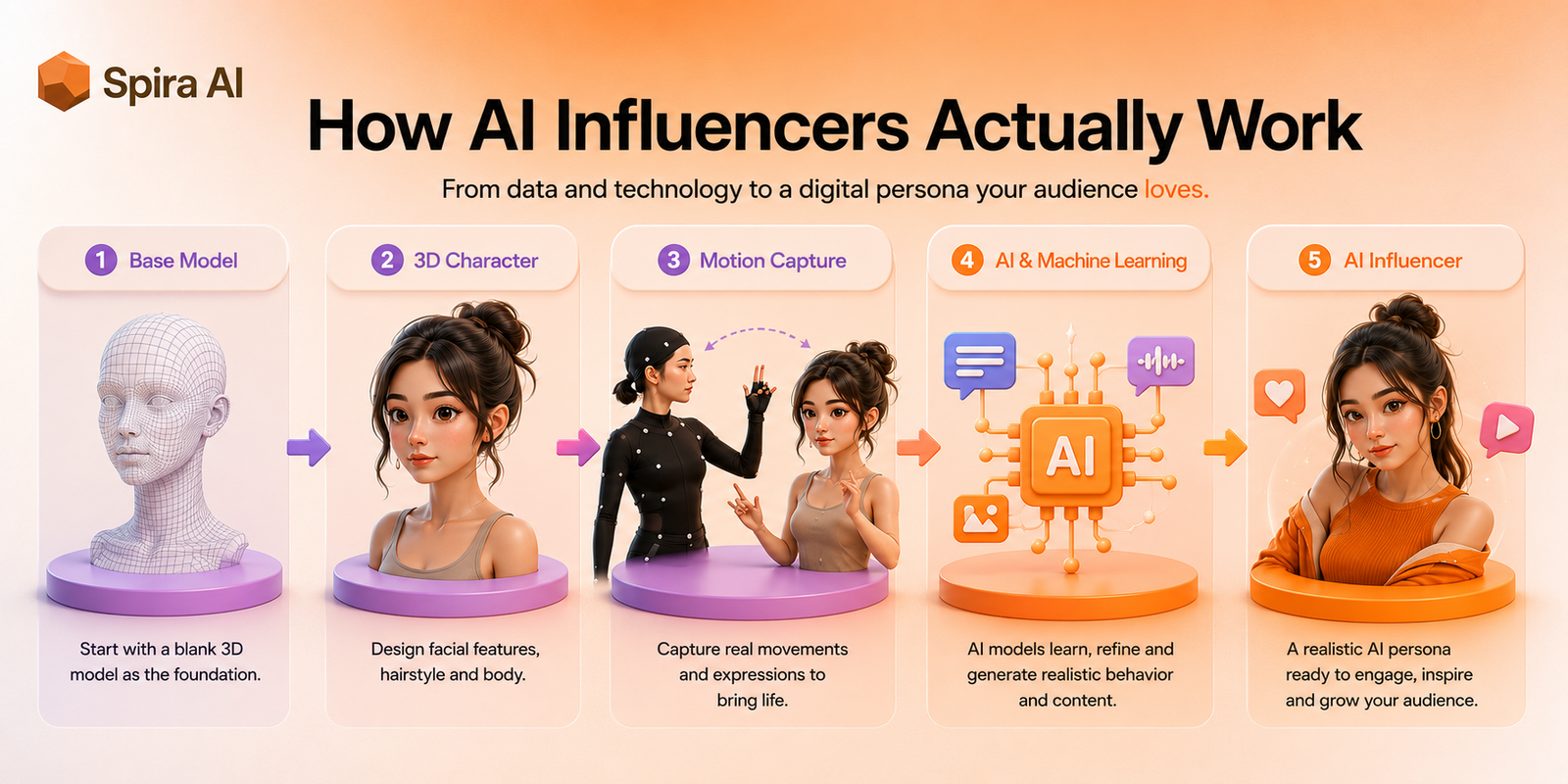
AI influencers are created and operated in a step-wise manner. It starts with defining the persona of the AI influencer. A user will input specific information such as name, age, background, aesthetic, and values. After the inputs are set, it is followed by visual design and audio/voice to build the characters. Once the influencer is generated, the influencer strategizes, produces, and posts content. In order to manage these AI influencers, a dedicated team is required to review and manage their work. Some technologies involved with AI influencers include:
Full CGI
This technique requires building a character model from scratch. 3D artists render the content piece by piece and add movement. One key example is Lil Miquela, whose creators used complex technologies to build a persona. Artists will use 3D rendering, motion capture, and machine learning to enhance the clothing, dimensionality, lighting, shadows, and depth to make the AI influencer as real and authentic as they can be.
Generative AI + LoRA
Low-rank Adaptation (LoRA) is based on the training of custom AI models on specific characters. After the character is generated, the AI influencer is used to create varied images in a variety of settings and outfits. This approach is more efficient and cheaper compared to full CGI, so many agencies and platforms tend to utilize this tool to generate and manage their AI influencers.
Motion and Video
Video generation models, lip-sync, and animation tools are required to turn static AI characters into live video. This requires a multimodal workflow, and often the biggest challenge is quality and consistency. Video generation models and image models such as Higgsfield are improving rapidly to ensure excellent quality and consistency with AI influencers.
Photo Refinement
Sometimes AI-generated photos can hallucinate (for example, we have seen the common example of additional fingers attached to a human hand). It can be disorienting as certain visual details may not be aligned with what is seen. Such problems must be addressed in the post-production step with tools such as Photoshop and Lightroom to enhance the image. This ensures that the final product and post generated by an AI influencer consists of minimal flaws.
The AI Influencer Market Right Now
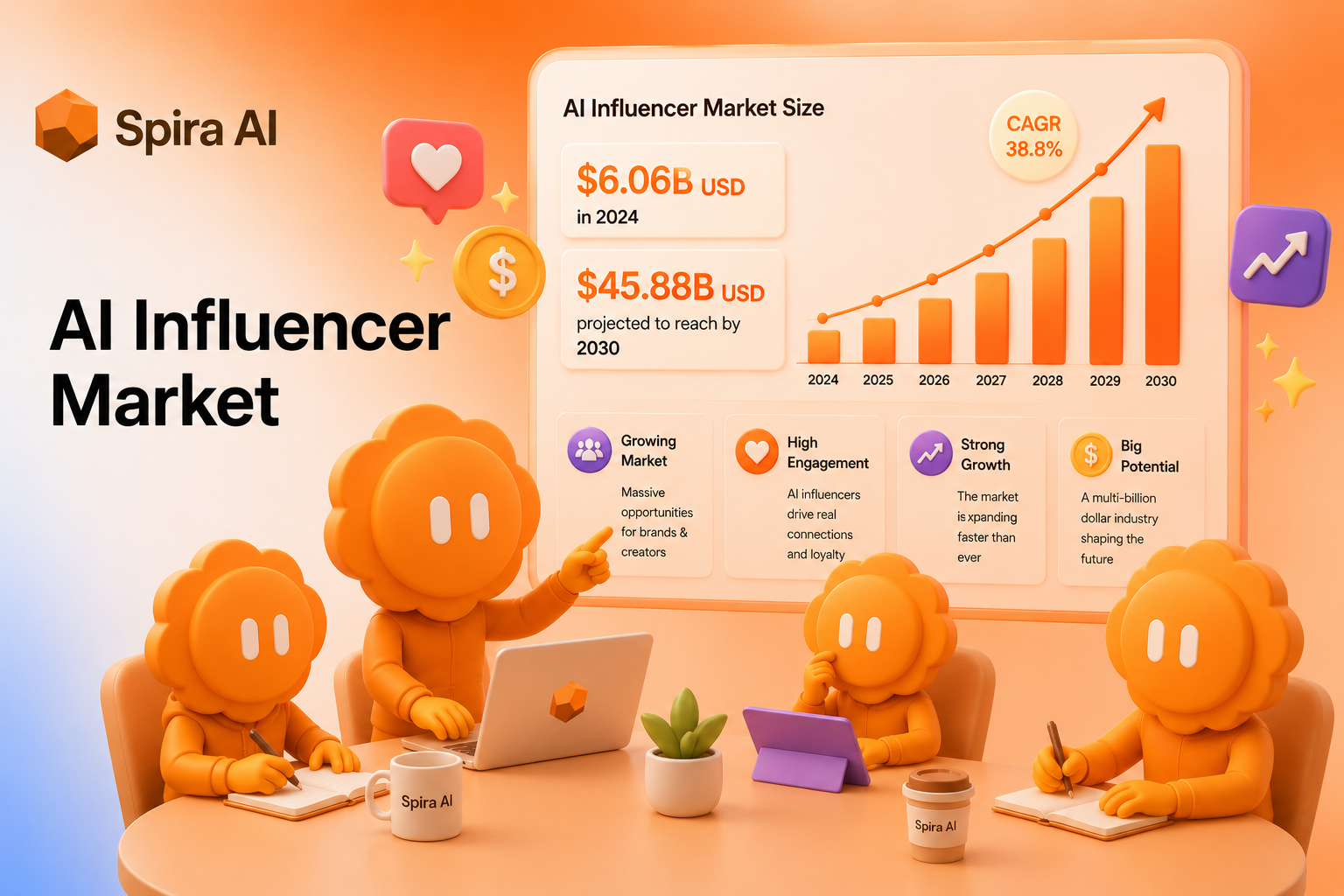
The influencer marketing platform is continually growing and is projected to grow to $89.90B USD by 2034 (with a CAGR of 19.50%). Despite AI influencers constituting only a fraction of this market size, they are starting to be embedded into marketing campaigns and seeing their potential amongst the audience.
Market Size and Growth Projections
Specifically within the influencer marketing platform, the global virtual influencer has massively increased. Grandview Research estimated the market size to be $6.06B USD in 2024 and projected to reach by $45.88B USD by 2030. The compound annual growth rate of 40.8% indicates that this market has high growth potential. Due to the innovations happening with generative AI along with brands’ increasing willingness to test AI influencers, the virtual influencer market will be very attractive in the coming years.
Adoption Across Industries
Recently, the largest revenue brought in by AI influencers were within fashion and lifestyle industries. Brands are using AI influencers as brand ambassadors, and their use has been widely popularized. Leading retailers such as H&M announced to create digital versions of their current models. In 2023, Levi Strauss began exploring AI models as part of their diversity initiatives. Other industries such as tech, fitness, beauty, and food are stepping into this domain.
Impact on E-Commerce Sales
AI influencers are already impacting e-commerce through the consumers they interact with. Especially within the US, the rise of AI influencers has led to an increase in consumer spending on certain products. Brands that are conscious of these conversion rates contributed by AI influencers are slowly opting in and using AI influencers to help spread awareness of their products. Economic Times has suggested that a large number of individuals follow at least one virtual influencer. As much as other industries are being impacted, AI influencers are commonly used as a form of advertising to reduce costs and time.
Why Brands Use AI Influencers?
Marketing teams aren't reaching for AI influencers because they're cool. They're reaching for them because they solve problems human talent can't: control, cost, and speed. The reasons are practical, and they add up fast.
They never clock out
A human influencer sleeps. An AI one doesn't. No scheduling back-and-forth, no waiting on approvals, no missed posting window because someone's on a flight. For a campaign running across time zones, AI influencers work perfectly. Content goes out when you need it.
You build the personality from scratch
Sign a human creator, and you inherit who they already are. An AI influencer starts from a blank page. You set the voice, aesthetic, and what story the character tells, and how. When the brief shifts, you adjust the character instead of renegotiating with a person.
You control every word
No off-script moments. No surprise post at 2 am that turns into a cleanup job. Every piece of content gets locked before it ships. The narrative stays exactly where you put it, so none of the accidental controversies that come attached to real people.
They cost less
Human influencers come with fees and negotiations. AI influencers skip all of it. The real spend is upfront, and it’s building the character once. After that, production cost drops sharply. Brands don’t need contracts, rates, or talent to manage anymore.
They scale without limits
One AI influencer can post across every platform at once, in as many languages as you need, without the quality slipping between them. You're not capped by how many hours a person ha, or how much one creator can physically make.
They still feel new
AI influencers are novel enough that people stop and look. In a feed where every brand runs the same playbook, this attention is an edge. The curiosity factor won't last forever. It’s why the brands moving now are the ones getting the most out of it.
They're easier to build than ever
In 2019, this kind of output meant a full production studio. Now it's a few tools and a small team, and as the platforms get simpler and cheaper, the barrier keeps dropping. You don't need a crew or a big budget to launch a character anymore. You need a clear idea of who it is.
The Honest Downsides and Risks
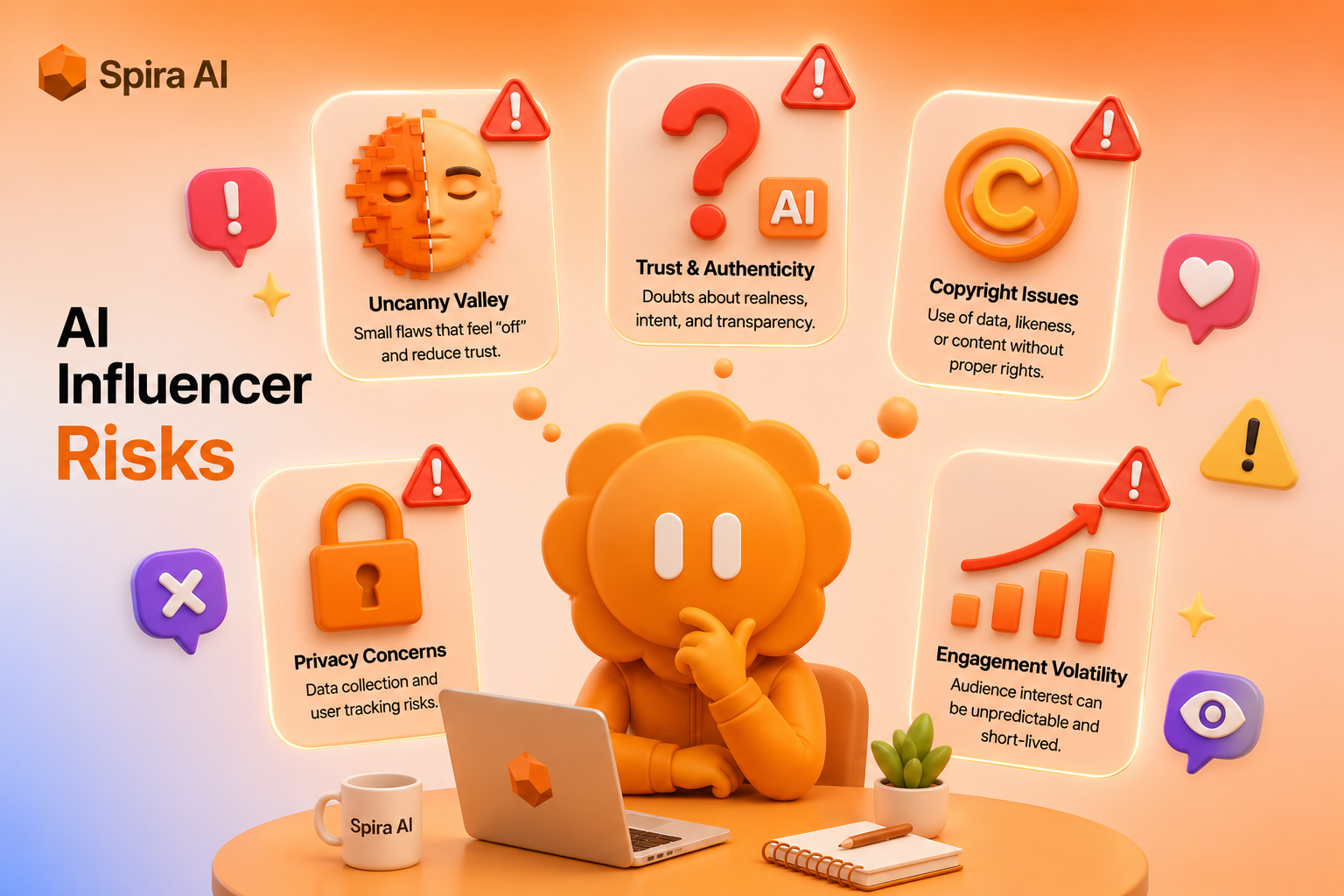
AI influencers have real advantages over human creators. But they come with real problems too. Here's what you actually need to weigh before you build a strategy around them.
The Uncanny Valley
AI-generated images still look off. Not always, but often enough to matter. The face reads as real, but something's missing. That subtle wrongness is the uncanny valley. The uncanny valley kills the connection you're trying to build.
Authenticity Questions
People question whether an AI influencer's opinion means anything, and it’s a valid concern. There's no real preference behind the recommendation, no reason to trust the take. If you can't earn that trust, the engagement won't convert.
No Lived Experience
A human influencer has actually used the product and can share their history, taste, and life. An AI doesn't. It only knows what you fed it, so the recommendation can come off like an ad reading its own script. To address this, you can employ good copywriting that narrows this gap, but it doesn't close it.
Harder to Earn Consumer Trust
People follow influencers because they're real and aspirational. They want what the person they admire is using, but AI breaks that logic. According to a U.S. survey, 86% do not fully trust AI and want to verify the information. If you don’t disclose that the influencer isn't real, the audience feels manipulated the moment they find out.
Key Risks for Brands
Beyond the trust problem, there are legal and reputational risks worth taking seriously.
Misrepresentation and Deception
In a lot of markets, you're legally required to disclose AI-generated content. The FTC's Endorsement Guides are already explicit about disclosing material connections and non-real endorsers, and more regulators are catching up. Skip the disclosure and you're exposed to real legal action, not just bad PR.
Brand Alignment and Control
An AI influencer can still drift off-message if your strategy is loose. That confuses your audience and chips away at your brand identity. Owning the asset doesn't mean it stays on-brand by default.
Data Privacy and Security
These tools run on data, and the platforms behind them collect it. Know what you're feeding in and where it goes. Privacy and security aren't a footnote here. They're part of the decision.
AI Influencers Worth Knowing
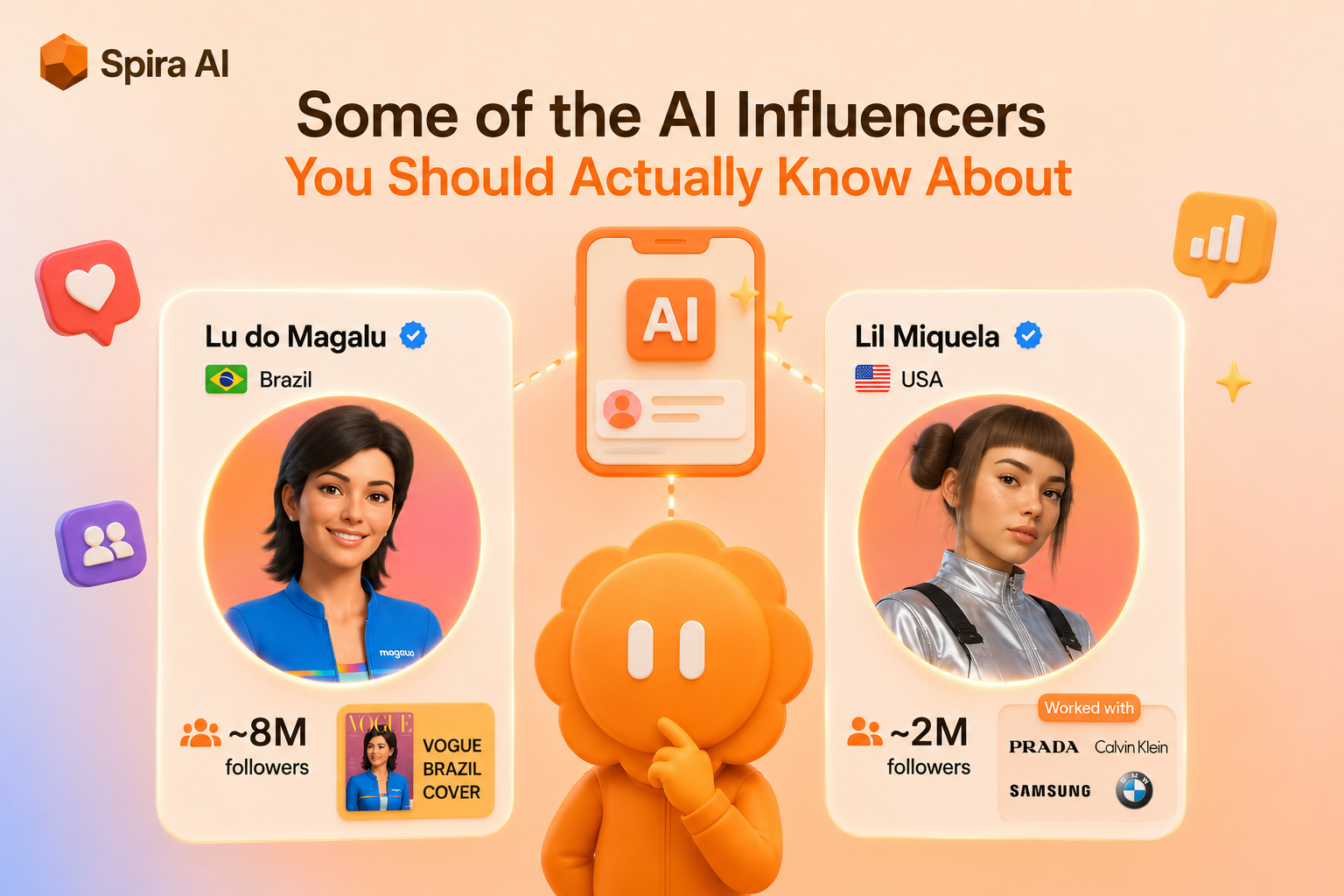
Here are some famous AI influencers worth knowing to understand best practices and use cases
Lu do Magalu
Magazine Luiza, one of Brazil's big-box retailers, created Lu do Magalu in 2003 as a virtual assistant for its e-commerce site. Her role kept expanding, and she's now a social media star in her own right. With 9.2 million Instagram followers, she's one of Brazil's most-followed influencers, and she's appeared on the cover of Vogue Brazil.
Lil Miquela
Created in 2016, Lil Miquela is a virtual character modeled as a 19-year-old Brazilian-American woman. She has around 2.2 million Instagram followers and has collaborated with Prada, Calvin Klein, Samsung, and BMW. She's also taken public positions on social and political issues, which showed later creators how far a virtual persona could go beyond straight product endorsements.
Aitana López
Aitana López is an AI influencer built by the Barcelona design agency The Clueless, and Spain's first fully AI-generated influencer. She has modeled for Victoria's Secret, Brandy Melville, and Guess. Her look is realistic enough that celebrities have reportedly slid into her DMs, and she has over 390,000 Instagram followers.
Case Studies
The fastest way to understand why AI influencers took off is to look at how real brands used them.
Hugo Boss: Rebranding With Imma and Nobody Sausage
Hugo Boss wanted a younger audience, so they brought in virtual influencers. The move worked because the contrast was the story: a legacy fashion house pairing with digital personas. It pulled far more press than a standard campaign would have.
Samsung x Lil Miquela: A Digital-First Play
Samsung went after a digitally native audience, and Lil Miquela fit the goal exactly. The partnership made sense on its face. A tech brand promoting through a character that already lived in digital culture. The medium matched the message.
How to Make Money with AI Influencers
Marketing is only one use. An AI influencer is also an asset you can monetize across several streams.
Brand Deals
The most common income source. Brands pay for posts, product placements, and campaign appearances, with rates set by follower count and engagement, same as any creator.
Subscription Platforms
Patreon and Fanvue let AI influencers sell exclusive content directly to subscribers. The upside: predictable recurring revenue that doesn't depend on landing the next deal.
Digital Products and Merch
Once a virtual influencer has the reach, that audience becomes a storefront for branded merch, collectibles, and digital downloads. The character stops being a marketing tool and becomes a full asset.
Ad Revenue
YouTube and TikTok share ad revenue once you hit their size and engagement thresholds. For an AI account, this works no differently than a human-run one.
Conclusion
AI is moving fast, and it's working its way into more of how we live and work. The images keep getting more realistic. Video generation is faster and smoother with every release. Conversational AI is harder to tell whether it’s fake or real. The trend is clear: AI influencers are going to get sharper, and they'll take up a bigger share of the space.
But they won't replace human influencers. If you want something faster, cheaper, and easier to control, AI influencers are a real option worth building around, and that option is only getting stronger.